Fear of Artificial Intelligence
Introduction to the Fear of Artificial Intelligence.
 Fear of artificial intelligence is no longer confined to science fiction novels or futuristic films. It has entered classrooms, churches, boardrooms, and dinner-table conversations. Parents wonder what kind of jobs their children will inherit. Employees worry about being replaced by automation. Leaders fear losing control over systems they do not fully understand. Some even question whether artificial intelligence threatens humanity’s future.
Artificial intelligence now influences how decisions are made, how work is performed, and how information is filtered and delivered. Algorithms help determine who gets hired, which loans are approved, what medical treatments are recommended, and which voices are amplified in public discourse. With this expanding influence comes a growing sense of unease.
Yet fear alone cannot guide us forward. As explored throughout How to Conquer the AI Conquest, fear must be examined, understood, and transformed into wisdom. The first step toward leading in an AI-driven age is understanding why artificial intelligence provokes such deep anxiety—and what that fear reveals about us.
1. Fear of the Unknown.
Human beings naturally fear what they do not understand. Artificial intelligence often feels mysterious because it operates primarily out of sight. Complex algorithms, neural networks, and data models function behind screens and servers, making decisions most people never witness directly. When unseen systems influence hiring practices, credit ratings, medical diagnoses, or news feeds, uncertainty quickly turns into suspicion.
This fear of the unknown is not unique to artificial intelligence. History shows that every major technological leap has followed a similar pattern. The printing press was once feared for undermining religious authority. Electricity was viewed as dangerous and unnatural. Early automobiles were accused of destroying communities. Over time, understanding replaced fear.
In How to Conquer the AI Conquest, the argument is not that artificial intelligence is harmless, but that ignorance magnifies fear. When people lack a basic understanding of how AI works—or how it is governed—they imagine worst-case scenarios. Education, transparency, and public literacy are essential antidotes to this anxiety. Fear thrives in darkness. Clarity brings confidence.
2. Loss of Control.
One of the deepest fears surrounding artificial intelligence is the perceived loss of control. Humans have long assumed that tools remain firmly under human command. AI challenges that assumption. When machines process information faster than people, identify patterns humans miss, and act at a massive scale, many feel displaced or diminished.
This fear is not merely technical; it is psychological and relational. People fear being overridden, ignored, or rendered unnecessary. Leaders fear that authority is shifting from human judgment to machine recommendations. Institutions fear losing agency over their own decisions.
How to Conquer the AI Conquest emphasizes that this fear is less about machines and more about governance. The real question is not whether AI exists, but who designs it, who controls it, and who is accountable when it fails. Artificial intelligence does not eliminate human authority unless humans surrender it. Control is not lost automatically. It is ceded when leadership abdicates responsibility.
3. Job Displacement Anxiety.
Perhaps the most common and emotionally charged fear surrounding artificial intelligence concerns work. Will AI replace human labor? Will entire professions disappear? Will people become economically obsolete?
These questions are understandable. Automation has already transformed manufacturing, logistics, customer service, and even creative fields. AI can write text, generate images, analyze contracts, and diagnose diseases. For many workers, this feels like standing on unstable ground.
Yet history again offers perspective. Technological innovation rarely eliminates work; instead, it reshapes it. The Industrial Revolution reduced some jobs but created entirely new industries. The digital revolution eliminated some roles but created others that had never existed before.
As outlined in How to Conquer the AI Conquest, artificial intelligence excels at speed, repetition, and pattern recognition—but it lacks moral judgment, relational intelligence, and purpose-driven creativity. The future of work will increasingly value what machines cannot replicate: empathy, ethical reasoning, leadership, and wisdom. Job displacement anxiety is real, but it must be met with reskilling, education, and human-centered leadership—not paralysis.
4. Moral and Ethical Concerns.
Another powerful source of fear is ethical. Artificial intelligence does not possess conscience, empathy, or moral accountability. It does not feel remorse. It does not understand justice. When systems make decisions that affect human lives, people rightly ask: Who is responsible?
Bias in algorithms, misuse of surveillance technology, and opaque decision-making processes have heightened public concern. Delegating moral decisions to systems without ethical grounding feels dangerous—and often is.
This fear, however, points toward responsibility rather than rejection. How to Conquer the AI Conquest argues that the solution is not to abandon AI but to insist on human-guided AI. Ethical frameworks, transparent oversight, and accountable leadership must shape technology.
Artificial intelligence reflects the values of those who create and deploy it. If fear reveals anything, it is the urgent need for moral clarity and ethical courage in technological development.
5. Cultural and Spiritual Unease.
Beyond economics and ethics lies a deeper layer of fear—one that is cultural and spiritual. Artificial intelligence raises fundamental questions about identity and meaning:
What makes us human?
What is intelligence, really?Can machines replace creativity, purpose, or soul? These are not technical questions. They are existential ones. For many, AI feels threatening because it challenges long-held assumptions about human uniqueness and value.
In faith communities, these concerns are particularly pronounced. Intelligence has long been associated with soul, spirit, and divine image. When machines appear to “think,” people worry about dehumanization. They fear a world where efficiency replaces dignity and data replaces wisdom.
How to Conquer the AI Conquest does not dismiss these concerns. Instead, it reframes them. Artificial intelligence cannot possess meaning because it does not seek meaning. It cannot have a purpose because it does not choose a purpose. These remain human—and spiritual—realities. Technology can imitate intelligence, but it cannot replace vocation, conscience, or transcendence.
6. Media Amplification and Fear Culture.
Modern media also amplify the fear of artificial intelligence. Headlines often focus on extremes: rogue AI, mass unemployment, or apocalyptic futures. Sensational narratives attract attention but distort reality.
Movies and novels reinforce images of machines turning against humanity. While these stories serve as cautionary tales, they also condition people to associate AI with catastrophe. Fear becomes cultural shorthand.
As discussed in How to Conquer the AI Conquest, fear sells—but it does not lead. Responsible leadership requires resisting exaggerated narratives and grounding public conversation in truth, nuance, and context.
When fear dominates the narrative, wisdom is drowned out.
7. Leadership Vacuum in the AI Age.
One reason fear persists is the absence of visible, trusted leadership in the AI conversation. Many institutions adopt AI quietly, without explanation or dialogue. People experience the effects of AI before they understand its purpose.
This silence creates suspicion. When leaders fail to explain how AI is used, governed, and constrained, fear fills the gap. Transparency is not optional—it is essential.
How to Conquer the AI Conquest emphasizes that leadership must be proactive. Leaders must educate, communicate, and invite participation. People fear what feels imposed. They trust what feels shared. Fear diminishes when people know their voices matter.
8. From Fear to Stewardship.
Fear itself is not the enemy. Fear is information. It signals uncertainty, vulnerability, and the need for guidance. The danger lies not in fear, but in letting fear dictate decisions.
Throughout How to Conquer the AI Conquest, the central argument is that artificial intelligence demands stewardship, not surrender. Stewardship means guiding technology toward human flourishing. It means asking not only “Can we?” but “Should we?” and “For whom?” When fear is examined honestly, it becomes an invitation to lead thoughtfully rather than retreat. It challenges individuals, organizations, and societies to clarify their values and exercise wisdom.
Conclusion.
Fear of artificial intelligence is understandable. AI touches work, identity, morality, and meaning—areas deeply tied to human dignity. But fear alone cannot guide us into the future.
Just to let you know, clarity is required. Just to let you know, wisdom is required. Ethical leadership is needed.
Artificial intelligence will shape the future, but it does not determine it. That responsibility remains human. When fear is transformed into understanding and purpose, it becomes a catalyst for better leadership rather than an obstacle to progress.
As How to Conquer the AI Conquest makes clear, the goal is not to defeat technology, but to master its use with courage, conscience, and clarity. The future of AI will not be shaped by machines alone—it will be shaped by the values of those who lead.
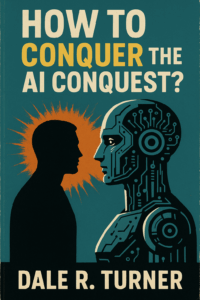 For a deeper exploration of how humanity can lead wisely, ethically, and confidently in an AI-driven age, see How to Conquer the AI Conquest by Dale R. Turner
Click here to see the book. https://www.21stcenturyrenewalministries.com/purchase-dale-turner-book/
Click here to see linkedin articles.
Click here to see other posts.
https://www.21stcenturyrenewalministries.com/product/how-to-conquer-the-ai-conquest/