Does Prayer Really Work?
Introduction to Does Prayer Really Work?
Prayer has been practiced across civilizations for thousands of years. From ancient Israel to modern churches, from hospital waiting rooms to private bedrooms, human beings continue to pray in moments of gratitude, fear, grief, hope, and uncertainty. Yet one question remains remarkably persistent in the modern world: Does prayer really work?
 For some people, prayer is unquestionably real because they have personally experienced peace, healing, guidance, or transformation through it. Others remain skeptical, asking whether prayer produces measurable results or whether its effects are simply psychological. Modern science has entered this discussion through studies in psychology, neuroscience, sociology, and medicine. While scientific research cannot fully measure the spiritual dimensions of prayer, evidence increasingly suggests that prayer profoundly affects the human mind, emotional health, relationships, and even physical well-being.¹
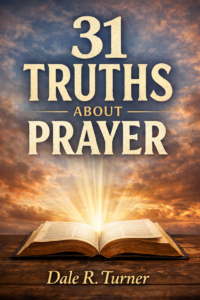
Click this link to learn more about this book. https://www.21stcenturyrenewalministries.com/product/31-truths-about-prayer/
The debate about prayer is often framed incorrectly. Many critics assume prayer “works” only if it functions like a vending machine in which every request receives an immediate supernatural answer. Biblical theology, however, presents prayer primarily as relationship, communion, transformation, and participation in the purposes of God.² In Scripture, prayer is not merely about changing circumstances; it is about changing people. Jesus Himself taught prayer as a continuing relationship with the Father rather than a mechanical formula for obtaining desired outcomes.³
Prayer in Biblical Perspective. Does Prayer Really Work?
The Bible consistently portrays prayer as both relational and transformative. The Apostle Paul instructed believers to “pray without ceasing,” emphasizing continual dependence upon God rather than occasional religious ritual.⁴ Jesus frequently withdrew to pray before major decisions, during emotional distress, and in moments of ministry preparation.⁵ Prayer in the biblical tradition includes worship, confession, thanksgiving, lament, intercession, and listening.
The Psalms especially reveal prayer’s emotional realism. They contain prayers of joy, anger, sorrow, fear, repentance, and hope. Prayer becomes a means through which individuals honestly encounter God amid real human struggles.⁶ This relational aspect explains why millions continue praying even when answers are delayed or unclear. Prayer offers connection, meaning, and spiritual grounding.
Christian theology also recognizes that prayer does not always eliminate suffering. Jesus prayed in Gethsemane that the cup of suffering might pass from Him, yet He ultimately surrendered to the Father’s will.⁷ Thus, biblical faith teaches that prayer is not magic manipulation but trust-filled communion with God.
Scientific Research on Prayer. Does Prayer Really Work?
Modern scientific research on prayer has produced mixed but fascinating results. Studies examining intercessory prayer—praying for others—have yielded inconsistent conclusions. Some medical studies found modest positive outcomes, while others showed little measurable difference.⁸ The famous STEP study in 2006, which investigated prayer among cardiac bypass patients, found no statistically significant improvement in recovery rates among patients who were prayed for.⁹ Critics of prayer often point to such studies as evidence against its effectiveness.
However, the issue is far more complicated. Prayer cannot easily be isolated and tested like a pharmaceutical drug because prayer involves subjective experience, personal belief, spiritual expectations, emotional states, and relational dynamics.¹⁰ Many scholars argue that prayer research becomes methodologically difficult because authentic prayer cannot be reduced to laboratory conditions.
Even when studies fail to prove miraculous intervention scientifically, researchers continue documenting significant psychological and emotional benefits associated with prayer. Research published in psychological and medical journals demonstrates that prayer often reduces anxiety, lowers stress, improves emotional regulation, and increases feelings of hope and resilience.¹¹ Some studies suggest prayer activates neurological pathways similar to those involved in meditation and deep emotional reflection.¹²
Researchers have also found that highly religious individuals who practice regular prayer frequently demonstrate increased emotional coping capacity during crises.¹³ Prayer appears particularly powerful during periods of grief, illness, uncertainty, and trauma because it provides meaning, emotional support, and a sense of transcendence.
Prayer and Mental Health. Does Prayer Really Work?
One of the strongest areas of evidence for prayer involves mental health. Numerous studies indicate that prayer can positively affect emotional well-being. Prayer has been associated with lower levels of depression, reduced anxiety, increased optimism, and greater emotional stability.¹⁴
Psychologists note that prayer often functions as a coping mechanism. Rather than suppressing fear or pain, prayer allows individuals to process emotions while maintaining hope. This emotional processing may explain why prayer remains central during difficult life events such as illness, death, divorce, and financial hardship.
Research also suggests that prayer can calm the nervous system. Studies indicate prayer may reduce heart rate, muscle tension, and stress-related physiological responses.¹⁵ These calming effects resemble findings associated with mindfulness and meditation practices. Some neuroscientists propose that contemplative prayer activates regions of the brain connected with attention, emotional regulation, and empathy.¹⁶
Importantly, prayer differs from secular meditation because prayer introduces relational and spiritual dimensions. Christian prayer involves trust in a loving and personal God rather than mere self-awareness. This relational aspect often produces hope and emotional security beyond simple relaxation techniques.
Does Prayer Produce Miracles? Does Prayer Really Work?
The most controversial question surrounding prayer concerns miracles. Can prayer truly alter physical reality? Can God intervene supernaturally?
Science, by its nature, struggles to evaluate miracles because miracles are extraordinary events that transcend ordinary natural explanation. Christians historically believe God can and does intervene in human history. Scripture contains numerous accounts of healing, deliverance, provision, and divine guidance connected with prayer.¹⁷
Even today, many believers testify to experiences they interpret as miraculous answers to prayer. Some describe unexpected healing, dramatic life change, restored relationships, or extraordinary provision. While anecdotal experiences cannot always satisfy scientific scrutiny, they remain deeply persuasive to those who experience them personally.
At the same time, mature Christian theology recognizes that not every prayer receives the answer people desire. Faith is not the guarantee of constant miracles. The Apostle Paul prayed repeatedly for his “thorn in the flesh” to be removed, yet God responded differently than Paul expected.¹⁸ Prayer therefore includes trust even amid unanswered questions.
Wesleyan theology offers a balanced perspective here. John Wesley strongly believed in divine healing and supernatural intervention while also emphasizing practical holiness, medicine, compassion, and responsible action.¹⁹ Wesley viewed prayer as cooperation with God’s grace rather than passive fatalism.
Prayer Changes the Person Who Prays. Does Prayer Really Work?
Perhaps the greatest evidence for prayer lies not merely in external outcomes but in internal transformation. Prayer consistently shapes character, attitudes, and spiritual maturity. Over time, people who pray regularly often develop increased patience, compassion, humility, gratitude, and emotional resilience.²⁰
Studies on contemplative prayer indicate that prayer may increase empathy and reduce emotional reactivity.²¹ Prayer encourages reflection, self-awareness, confession, forgiveness, and hope. These changes profoundly affect relationships and communities.
Christian spirituality has long taught that prayer aligns the human heart with the will of God. Rather than simply convincing God to fulfill human desires, prayer transforms human desires themselves. This may explain why many lifelong believers continue praying faithfully despite hardships. Prayer itself becomes part of spiritual formation.
Theologian Richard Foster describes prayer as the “central avenue God uses to transform us.”²² Through prayer, individuals experience deeper awareness of God’s presence and greater openness to divine grace.
The Social Power of Prayer. Does Prayer Really Work?
Prayer also possesses social and communal dimensions. Congregational prayer strengthens community bonds and reinforces collective hope during difficult times. Families who pray together often report stronger emotional connection and greater resilience during crises.²³
Online health communities and support networks frequently emphasize prayer as one of the most meaningful forms of encouragement.²⁴ During illness or tragedy, people often say, “We are praying for you,” because prayer communicates compassion, solidarity, and emotional presence.
Critics sometimes dismiss such statements as empty sentiment. Yet research increasingly suggests social support itself powerfully affects mental and emotional well-being. Prayer often functions as both spiritual practice and relational care.
Faith Beyond Scientific Measurement. Does Prayer Really Work?
Science can study certain effects of prayer, but it cannot fully evaluate spiritual realities. Love, beauty, meaning, hope, and faith all transcend purely material measurement. Prayer ultimately belongs within this broader human search for transcendence and relationship with God.
Christian faith does not rest solely upon laboratory verification. Faith involves trust rooted in spiritual experience, Scripture, tradition, reason, and personal encounter with God.²⁵ The limitation of scientific methodology does not necessarily invalidate spiritual reality.
In fact, many scholars argue that prayer should not primarily be evaluated by whether every request is granted. Prayer “works” because it nurtures relationship with God, deepens spiritual awareness, strengthens emotional resilience, and transforms human lives.
Conclusion. Does Prayer Really Work?
So, does prayer really work? The answer depends partly on how one defines “work.” If prayer is viewed merely as a supernatural mechanism for obtaining desired outcomes, the evidence appears mixed and incomplete. However, if prayer is understood biblically and spiritually—as communion with God, emotional transformation, spiritual formation, and participation in divine grace—then the evidence becomes remarkably compelling.
Scientific research increasingly supports prayer’s positive effects on mental health, stress reduction, emotional resilience, and coping ability.²⁶ Millions of believers across generations also testify to personal experiences of peace, guidance, healing, and transformation through prayer.
Ultimately, prayer is both evidence and faith. Evidence suggests prayer profoundly shapes human well-being. Faith believes prayer also connects humanity to the living God. Together, evidence and faith reveal why prayer remains one of the most enduring and transformative practices in human history.
Endnotes Does Prayer Really Work?
1. C. Andrade and B. Radhakrishnan, “Prayer and Healing: A Medical and Scientific Perspective on Randomized Controlled Trials,” Indian Journal of Psychiatry 51, no. 4 (2009): 247–253, 248.
2. Richard Foster, Prayer: Finding the Heart’s True Home (New York: HarperCollins, 1992), 8–10.
3. The Holy Bible, Revised Standard Version (New York: Thomas Nelson, 1972), Matthew 6:5–13.
RSV, 1 Thessalonians 5:17.
RSV, Luke 5:16.
4. Walter Brueggemann, The Message of the Psalms (Minneapolis: Augsburg Publishing, 1984), 52–60.
5. RSV, Matthew 26:39.
6. David R. Hodge, “A Systematic Review of the Empirical Literature on Intercessory Prayer,” Research on 7. Social Work Practice 17, no. 2 (2007): 174–187.
8. Herbert Benson et al., “Study of the Therapeutic Effects of Intercessory Prayer (STEP) in Cardiac Bypass 9. Patients,” American Heart Journal 151, no. 4 (2006): 934–942.
10. Michael J. Breslin and Gregory Lewis, “Theoretical Models of the Nature of Prayer and Health,” Mental Health, Religion & Culture 11, no. 1 (2008): 9–21.
11. Harold G. Koenig, Medicine, Religion, and Health (West Conshohocken, PA: Templeton Foundation Press, 2008), 112–118.
12. Andrew Newberg and Mark Waldman, How God Changes Your Brain (New York: Ballantine Books, 2009), 67–72.
13. H. Adams, “The Effects of Prayer on Attention Resource Availability,” Frontiers in Psychology 7 (2016): 1–11.
14. “Prayer and Mental Health,” Psychology Today, December 3, 2019.
15. Lindsay Upenieks, “Unpacking the Relationship Between Prayer and Anxiety,” Journal of Religion and Health 61, no. 6 (2022): 4820–4835.
16. Andrew Newberg, Principles of Neurotheology (Burlington, VT: Ashgate Publishing, 2010), 93–99.
17. RSV, James 5:13–16.
18. RSV, 2 Corinthians 12:7–10.
19. John Wesley, The Works of John Wesley, vol. 14 (Grand Rapids: Baker Books, 1996), 221–225.
20. Dallas Willard, The Spirit of the Disciplines (San Francisco: Harper & Row, 1988), 160–167.
21. K. C. McCulloch et al., “The Effect of Prayer on Psychological Perspective,” Journal of Psychology and Theology 48, no. 4 (2020): 302–314.
22. Foster, Prayer, 2.
23. David B. Newman and Jesse Graham, “The Dynamics of Prayer in Daily Life and Implications for Well-Being,” Social Psychological and Personality Science 14, no. 4 (2023): 411–420.
24. C. Estelle Smith et al., “I Cannot Do All of This Alone: Exploring Instrumental and Prayer Support in Online Health Communities,” arXiv preprint (2020), 5–8.
25. Randy L. Maddox, Responsible Grace: John Wesley’s Practical Theology (Nashville: Kingswood Books, 1994), 19–27.
26. T. P. Simão et al., “The Effect of Prayer on Patients’ Health: Systematic Literature Review,” Religions 7, no. 1 (2016): 1–15.
Articles about Books by Dale R. Turner.
Click on the links to view.
Angels & Pinheads, Matter & Spirit
https://www.21stcenturyrenewalministries.com/product/angels-pinheads-matter-spirit/
Your New Life in Christ Study Guide
https://www.21stcenturyrenewalministries.com/product/your-new-life-in-christ-a-study-guide/
Why Bears Wear Socks
https://www.21stcenturyrenewalministries.com/product/why-bears-wear-socks/
How to Conquer the AI Conquest
https://www.21stcenturyrenewalministries.com/product/how-to-conquer-the-ai-conquest/
Why the Resurrection Matters
https://www.21stcenturyrenewalministries.com/product/why-the-resurrection-matters/
Your New Life in Christ
https://www.21stcenturyrenewalministries.com/product/your-new-life-in-christ/
Annual Spiritual Impact Event
https://www.21stcenturyrenewalministries.com/product/annual-spiritual-impact-event/
The Unique You
https://www.21stcenturyrenewalministries.com/product/the-unique-you/
Difficult Questions For Christians
https://www.21stcenturyrenewalministries.com/product/difficult-questions-for-christians/
Kinfolk Wisdom: What We Pass On
https://www.21stcenturyrenewalministries.com/product/kinfolk-wisdom-passed-on/
How to Be Wise at Any Age
https://www.21stcenturyrenewalministries.com/product/wisdom-at-any-age/
The Stonewall System
https://www.21stcenturyrenewalministries.com/product/stonewall-chess-system/
Living Forward Skills Every Generation Needs
https://www.21stcenturyrenewalministries.com/product/living-forward-generation-skills/
The First 100 Days
https://www.21stcenturyrenewalministries.com/product/thw-first-100-days/
200 Ways to Overcome Loneliness
31 Ways to Overcome Doubt
https://www.21stcenturyrenewalministries.com/product/31-ways-to-overcome-doubt/
31 Reasons to Have Hope For The Future
https://www.21stcenturyrenewalministries.com/product/31-reasons-to-have-hope-for-the-future/
31 Connections That Will Help You Conquer Depression
https://www.21stcenturyrenewalministries.com/product/31-connections-conquer-depression/
31 Ways That You Can Be Riah
https://www.21stcenturyrenewalministries.com/product/31-ways-that-you-can-be-rich/
TLC Groups For Busy Disciples
https://www.21stcenturyrenewalministries.com/product/tlc-groups-for-busy-disciples/
31 Ways That Forgiveness Transforms Your Life
https://www.21stcenturyrenewalministries.com/product/31-ways-that-forgiveness-transforms-your-life/
31 Truths About Prayer.
https://www.21stcenturyrenewalministries.com/product/31-truths-about-prayer/
31 Ways to Tackle Anxiety
https://www.21stcenturyrenewalministries.com/product/31-ways-to-tackle-anxiety/
Reaching The next Generation
https://www.21stcenturyrenewalministries.com/product/reaching-the-next-generation/
Travel in the Eternal Dimension
https://www.21stcenturyrenewalministries.com/product/travel-in-the-spiritual-dimension/
Fruit of the Spirit Practical Guide
https://www.21stcenturyrenewalministries.com/product/fruit-of-the-holy-spirit-a-practical-guide/
The Timeless Dimension of Heaven
https://www.21stcenturyrenewalministries.com/product/the-timeless-dimension-of-heaven/
What Would Jesus Do with Our Church?
https://www.21stcenturyrenewalministries.com/product/what-would-jesus-do-with-your-church/
Spiritual Gifts Century 21
https://www.21stcenturyrenewalministries.com/product/spiritual-gifts-century-21/
The Non-Institutional Institution Thinker
https://www.21stcenturyrenewalministries.com/product/non-institutional-institution-thinker/
Following Jesus Not Institutions
https://www.21stcenturyrenewalministries.com/product/following-jesus-not-institutions/
How To Conquer the AI Conquest
https://www.21stcenturyrenewalministries.com/product/how-to-conquer-the-ai-conquest/
Dale Turner books on Amazon.
As an Amazon Affiliate I receive commissions on sales.
Click the blue links to see details.
The First 100 Days https://amzn.to/3NaoyYy
Annual Spiritual Impact Event https://amzn.to/4sSyoP8
Your New Life in Christ https://amzn.to/49PifSS
TLC Groups for Busy Disciples https://amzn.to/45aVWV8
Difficult Questions for Christians https://amzn.to/4sIsgce
Angels & Pinheads, Matter & Spirit https://amzn.to/49AncxF
How to Conquer the AI Conquest? https://amzn.to/4jNf4hZ
The Unique You. https://amzn.to/4aT5s2V
Why Bears Wear Socks. https://amzn.to/4raXA1J
31 Ways to Overcome Doubt https://amzn.to/4jAhBfg
31 Ways That You Can Be Rich https://amzn.to/45PwGUu
31 Ways to Tackle Anxiety https://amzn.to/3Naq398
31 Connections Conquer Depression https://amzn.to/3NHBu8f
31 Reasons Have Hope for the Future https://amzn.to/4sIcpKE
31 Ways That Forgiveness Transforms https://amzn.to/4sDMF1W
Living Forward Skills Every Generation https://amzn.to/3Lg26N4
Kinfolk Wisdom: What We Pass On https://amzn.to/4pxyIQb
How to be Wise at Any Age https://amzn.to/4qPy8yk
Following Jesus, Not Institutions https://amzn.to/3M5zo1F
31 Truths About Prayer. https://amzn.to/4tfMtF3
Reaching The Next Generation https://amzn.to/4tZFLnT
Travel in The Eternal Dimension https://amzn.to/3PcMImj
Fruit of The Spirit https://amzn.to/4u8uMJ4
The Timeless Dimension of Heaven https://amzn.to/4exJeFs
What Would Jesus Do with Our Church? https://amzn.to/4dz5sWz
Spiritual Gifts Century 21 https://amzn.to/4wk2o8d
The Non-Institutional Institution Thinker https://amzn.to/3PdeZsY
Following Jesus Not Institutions https://amzn.to/4daq1bX
How To Conquer The AI Conquest https://amzn.to/3QYAsGO
The Stonewall System https://amzn.to/4wqLbtG
Articles on LinkedIn. Click blue link to view.
Prayer As Listening.
https://www.linkedin.com/pulse/prayer-listening-rediscovering-quiet-voice-god-dale-richard-turner-w6src/?trackingId=Siee6HFqlA%2BZi9HxN6ujjg%3D%3D
The Power of Prayer.
https://www.linkedin.com/pulse/power-prayer-dale-richard-turner-jawlc/?trackingId=IpGZrhMdS%2FoGU%2BzJKLcf7g%3D%3D
The Meaning Of Prayer.
https://www.linkedin.com/pulse/meaning-prayer-dale-richard-turner-vp1ee/?trackingId=7QIfrbZFstgHcsgy5fEUrg%3D%3D
The Bible and Prayer.
Reaching the Next Generation.
https://www.linkedin.com/pulse/reaching-next-generation-closing-gap-matters-most-dale-richard-turner-0phbe/?trackingId=gEqQUQ5KCCgPiOgJgGh5RQ%3D%3D
Travel In The Eternal Dimension.
https://www.linkedin.com/pulse/travel-eternal-dimension-dale-richard-turner-ftexe/
Why Do People Pray? Psychology and Faith.
https://www.linkedin.com/pulse/why-do-people-pray-dale-richard-turner-7owbe/?trackingId=Bu2CiLVcJcN%2BrayS3NgzOg%3D%3D